The Copper Water Ritual: How to Drink from Copper, and What the Research Says
How to keep water in a copper bottle or dispenser, how long to leave it, why acidic drinks stay out, how to care for patina, and what the 2012 copper pot study actually found.
By LiveWell Earth

In this guide
Water kept overnight in a copper vessel is one of the oldest daily rituals there is. In Ayurvedic households it has a name, tamra jal, copper water: a vessel filled before bed and poured first thing in the morning. This guide covers how to keep the practice well, what the research actually says, and the few simple rules that make copper a pleasure to live with for years.
How the ritual works
The method is unhurried. Fill a pure copper bottle or dispenser with plain, still drinking water in the evening, leave it at room temperature overnight, and drink it through the morning. Six to eight hours, or simply overnight, is the window most people keep. Empty and refill it every day rather than topping up old water.
- Plain water only. Copper is for still drinking water, not for juice, lemon water, tea, milk or anything fizzy.
- Room temperature. No boiling water and no ice-cold storage; the vessel is not a kettle or a cooler.
- A fresh fill each evening. The ritual is a daily one.
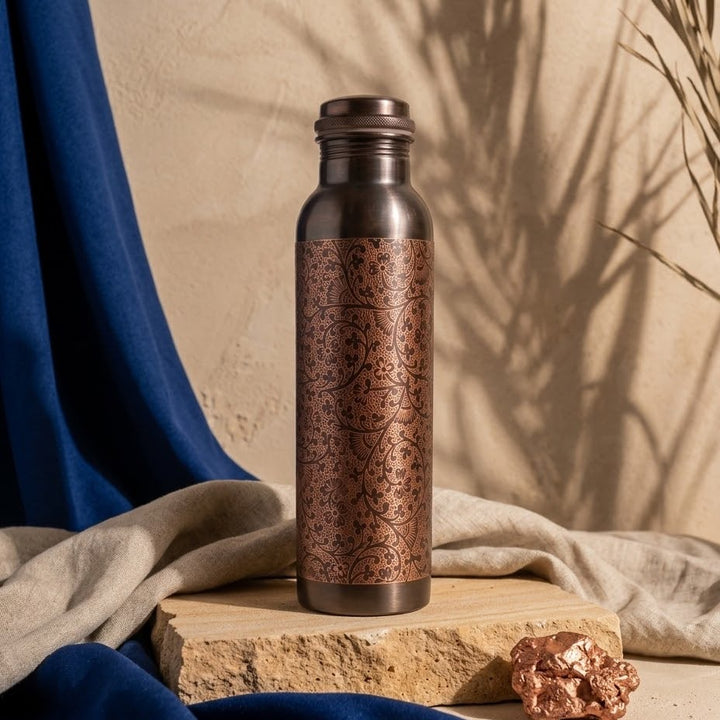
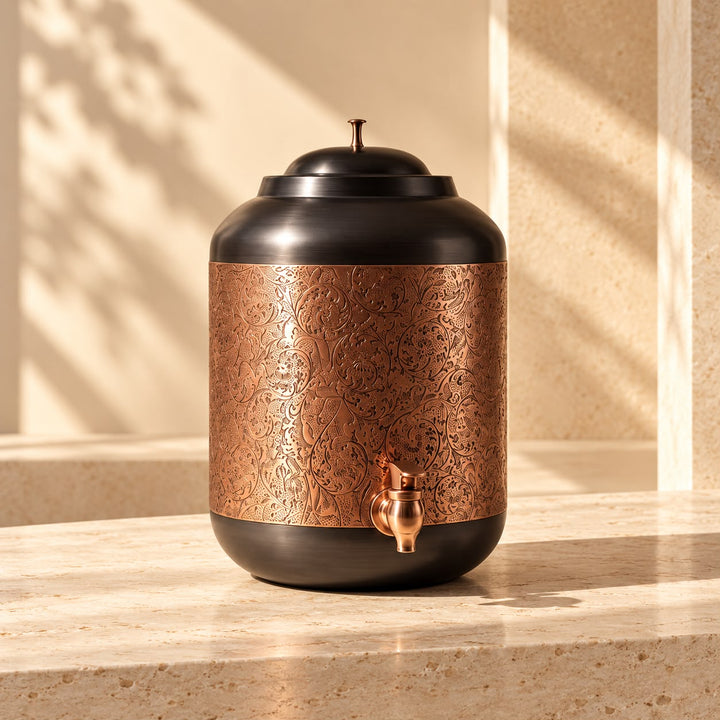
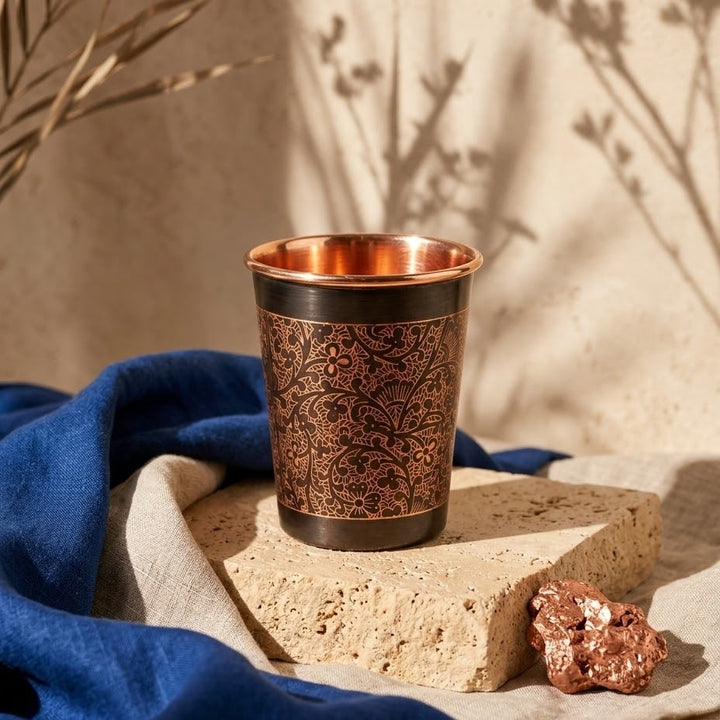
For a single person, the Longevity Copper Bottle (1 L) holds a morning's worth. For a household, the Longevity Copper Water Dispenser (10 L) sits on the counter with a spigot, and the 8 oz copper cup is made for the pour.
What the research says, plainly
The study most often cited is Sudha and colleagues, published in 2012 in the Journal of Health, Population and Nutrition. Researchers deliberately added bacteria to drinking water and stored it in copper pots for 16 hours at room temperature. After that time, the bacteria could no longer be grown in the laboratory, and the copper that had moved into the water measured 177 ± 16 parts per billion, within World Health Organization limits for drinking water.
It is a laboratory result, and we present it as one. It explains why copper vessels have been trusted for so long, and it is not a promise that a bottle makes unsafe water safe to drink. Always start with water that is already safe to drink.
How much copper is in a day
Copper is an essential trace mineral. The recommended daily amount for adults is 900 micrograms, and the tolerable upper intake level, the most an adult can take each day without risk, is 10 milligrams. The small amount that moves into plain water kept overnight is far below that ceiling, which is why the rules above matter: plain water, a daily refill, no acidic drinks.
Why acidic drinks stay out of copper
Acidity draws copper out of the metal much faster. Food-safety guidance in the United States says copper should not touch foods or drinks with a pH below 6, which takes in citrus juice, lemon water, vinegar, wine and most soft drinks. It is the reason state regulators have cautioned against serving Moscow mules in unlined copper mugs. Keep your copper for still water and the question never comes up.
Caring for copper
Copper is a living metal. Over weeks it darkens to a deep, even patina, which is normal and simply shows the vessel is pure, unlacquered copper. To bring back the warm shine, rub the surface with a little salt and lemon juice on a soft cloth, rinse well with water and dry completely. Never put copper in the dishwasher, and never leave cleaning lemon inside the vessel.
- Dark brown or black: natural patina, safe to keep.
- Green spots: a sign the vessel stayed damp; clean it with salt and lemon, rinse and dry fully.
- Inside the bottle: rinse daily, clean weekly, and leave it open to air-dry.
Beyond the bottle
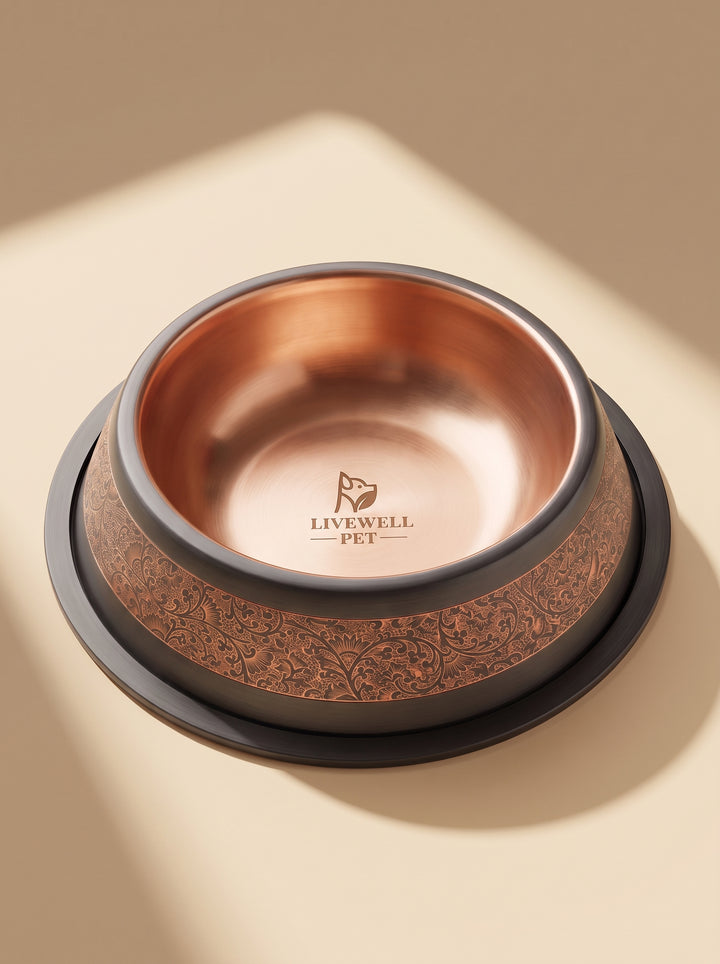
The same metal carries into other small rituals. A pure copper tongue scraper is a morning practice recorded in Ayurvedic texts, and the copper pet bowl brings the habit to the companions who share your home, with a clear list of breeds that should ask a vet first. The full range lives in the Copper Collection.
Who should check first
Anyone with a condition that affects how the body handles copper, such as Wilson's disease, should speak with their doctor before drinking water stored in copper. The same goes for pregnancy or any medical question about minerals.
Questions we are asked
How long should water stay in a copper bottle?
Overnight, roughly six to eight hours, then drink it through the morning and refill in the evening.
Can I put lemon water or hot water in copper?
No. Keep copper for plain, still water at room temperature. Acidic or hot drinks draw more copper from the metal.
Why has my bottle turned dark?
That is patina, the natural darkening of pure copper. Clean it with salt and lemon if you prefer the bright finish.
How do I know it is real copper?
Pure copper is unlined and unlacquered, has real weight in the hand, and develops a patina with use. Our vessels are solid copper, finished by hand.
Sources
- Sudha VBP, Ganesan S, Pazhani GP, et al. Storing drinking-water in copper pots kills contaminating diarrhoeagenic bacteria. J Health Popul Nutr. 2012;30(1):17-21.
- Institute of Medicine. Dietary Reference Intakes for Vitamin A, Vitamin K, Arsenic, Boron, Chromium, Copper, Iodine, Iron, Manganese, Molybdenum, Nickel, Silicon, Vanadium, and Zinc. National Academies Press, 2001.
- U.S. Food and Drug Administration. Food Code, section 4-101.14 (copper and acidic foods).
Mentioned in this guide

More from the Journal
All guides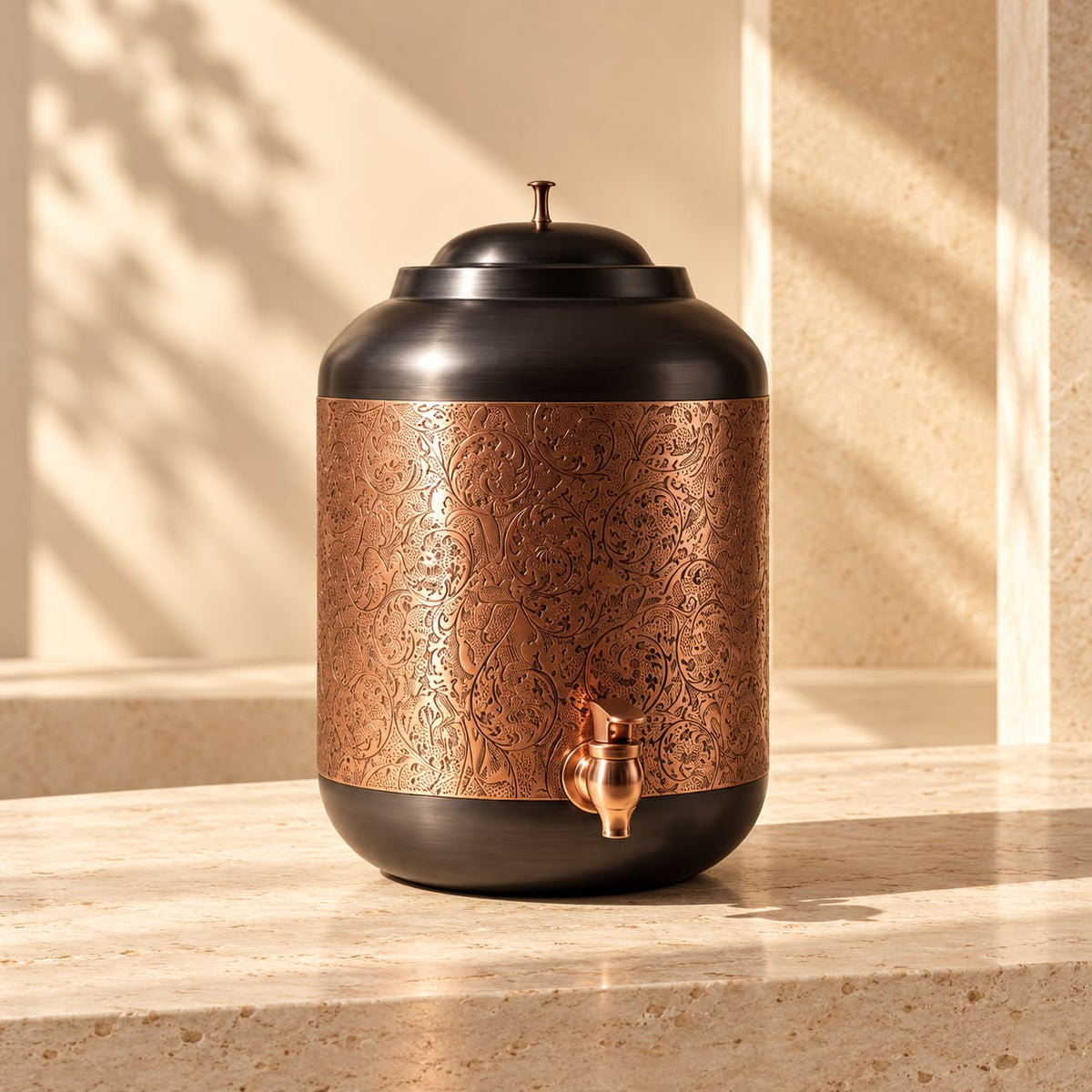
Copper Water Dispenser: Sizing, Setup and Care (10 L, 2.6 Gallons)
How much a 10-liter copper water dispenser holds, how many people one fill serves, how to set it up, and how to clean it by hand.

Copper peptides: what copper tripeptide-1 means on a label
What copper tripeptide-1 means on an ingredient list, why it sits where it does, and how to layer a copper peptide cream and scalp serum.